
CIENCIA
¿Qué tienen que ver los Sanfermines con la tercera ley de Newton? ¿Y por qué podrían ayudar a prevenir desastres?
El 6 de julio a las 12.00 tiene lugar en Pamplona el esperado chupinazo que da inicio a las fiestas de San Fermín de Pamplona. Y esto tiene que ver con la física.
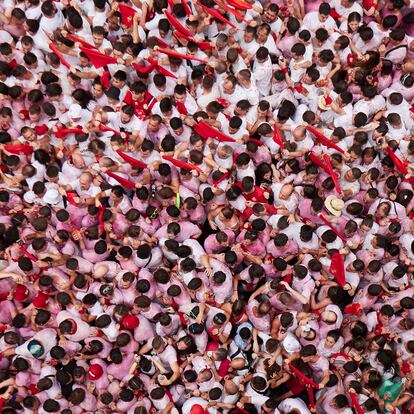
- Este evento reúne a miles de personas en la plaza Consistorial, creando una multitud que se mueve como una especie de fluido.
- Un reciente estudio publicado en Nature revela que estos movimientos no son caóticos, sino que siguen principios de la dinámica de fluidos, formando patrones circulares cada 18 segundos.
- La muchedumbre sigue la tercera ley de Newton: por cada acción hay una reacción igual y opuesta, lo cual es crucial para entender y prevenir tragedias en aglomeraciones.
Pero profundicemos más en este tema:
- Al superar el umbral de cuatro personas por metro cuadrado, los individuos se funden en la multitud, formándose subgrupos de unos centenares, con unos girando hacia la izquierda y otros a la derecha que van creciendo en tamaño.
- La interacción entre individuos genera fuerzas de empuje y compresión, haciendo que la masa se mueva de forma sincronizada.
¿Por qué es importante? Detectar estos patrones permite anticipar cuando la dinámica colectiva puede volverse peligrosa y prevenir accidentes. Es decir, que estudiando los Sanfermines se pueden predecir accidentes en eventos donde haya grandes aglomeraciones.
©Foto: Eduardo Sanz (Europa Press)
Si quieres saber más, puedes leer aquí.